The year 2026 has brought unexpected and profound challenges to the global community, reshaping the way we think about travel, safety, and our shared humanity. As the conflict involving the USA, Israel, and Iran escalated in late February, the ripple effects have been felt far beyond the borders of the Middle East.
For many people in the tourism industry, this period is marked by a difficult duality: the need to acknowledge the unfolding tragedy and the reality that millions of families depend on peaceful travel for their survival. Tourism is more than just a luxury; it is the economic heartbeat of coastal communities and historic towns across the Mediterranean and beyond.
How the Conflict is Reshaping Tourism in 2026
The geopolitical events of February 28, 2026, served as a turning point for international travel patterns.
What was once a thriving corridor for global explorers has suddenly become a region of high-level caution and restricted movement.
The immediate impact was a sharp decline in travel to the Middle East and North Africa, as travelers sought more stable environments.
According to recent economic reports, the regional tourism sector is facing a staggering daily loss of approximately $600 million.
This isn’t just a loss of revenue; it represents thousands of livelihoods in the hospitality and aviation sectors being put on hold.
Airlines have had to perform a logistical miracle, rerouting hundreds of flights daily to avoid closed airspaces.
While the desire to see the world remains, the criteria for choosing a destination have shifted toward long-term political stability.
We are seeing a move toward “Certainty Travel,” where the primary goal is to find a sanctuary of peace and reliability.
It is a somber reminder that global stability is the foundation upon which all our cultural exchanges are built.
Current Travel Advisories
Official Warnings and Regional Status
Major international bodies, including the US State Department and the UK Foreign Office, have issued significant updates this March.
The most severe “Do Not Travel” (Level 4) advisories are currently in place for Israel, Gaza, Iran, and Iraq.
Several neighboring countries, including Jordan and Lebanon, have been elevated to “Reconsider Travel” status due to regional volatility.
A “Worldwide Caution” was issued on March 22, 2026, advising travelers to maintain a high degree of situational awareness globally.
These advisories are designed to protect citizens, but they also signal a halt in tourism for some of the world’s most historic sites.
If you are planning a trip, it is vital to check your government’s official portal daily, as situations can shift within hours.
Many travelers are now opting for destinations that remain at Level 1 status, where normal precautions are sufficient.
This shift ensures that travelers can find emotional relief without the constant anxiety of shifting security alerts.
The “Aerial Bridge” Collapse and Flight Alternatives
The closure of the Middle East aerial corridor has fundamentally changed how we fly between Europe and Asia.
The once-busy path over the Gulf is largely closed, forcing flights to take a northern or southern bypass.
Travelers should expect longer flight durations, with some routes adding three to four hours to the journey.
Airlines are now primarily using the “Southern Route” over Egypt, Saudi Arabia, and Oman to maintain global connectivity.
This rerouting has led to an increase in ticket prices as carriers manage higher fuel consumption and operational complexity.
Booking direct flights to your destination whenever possible to avoid transit complications in affected hubs is recommended
Always confirm your flight status 48 hours before departure, as schedule changes have become more frequent this season.
Despite these hurdles, the aviation industry’s resilience continues to bridge the gap between continents.
Is the Ionian Sea a Safe Destination in 2026?
The Ionian as a “Blue Zone” of Stability
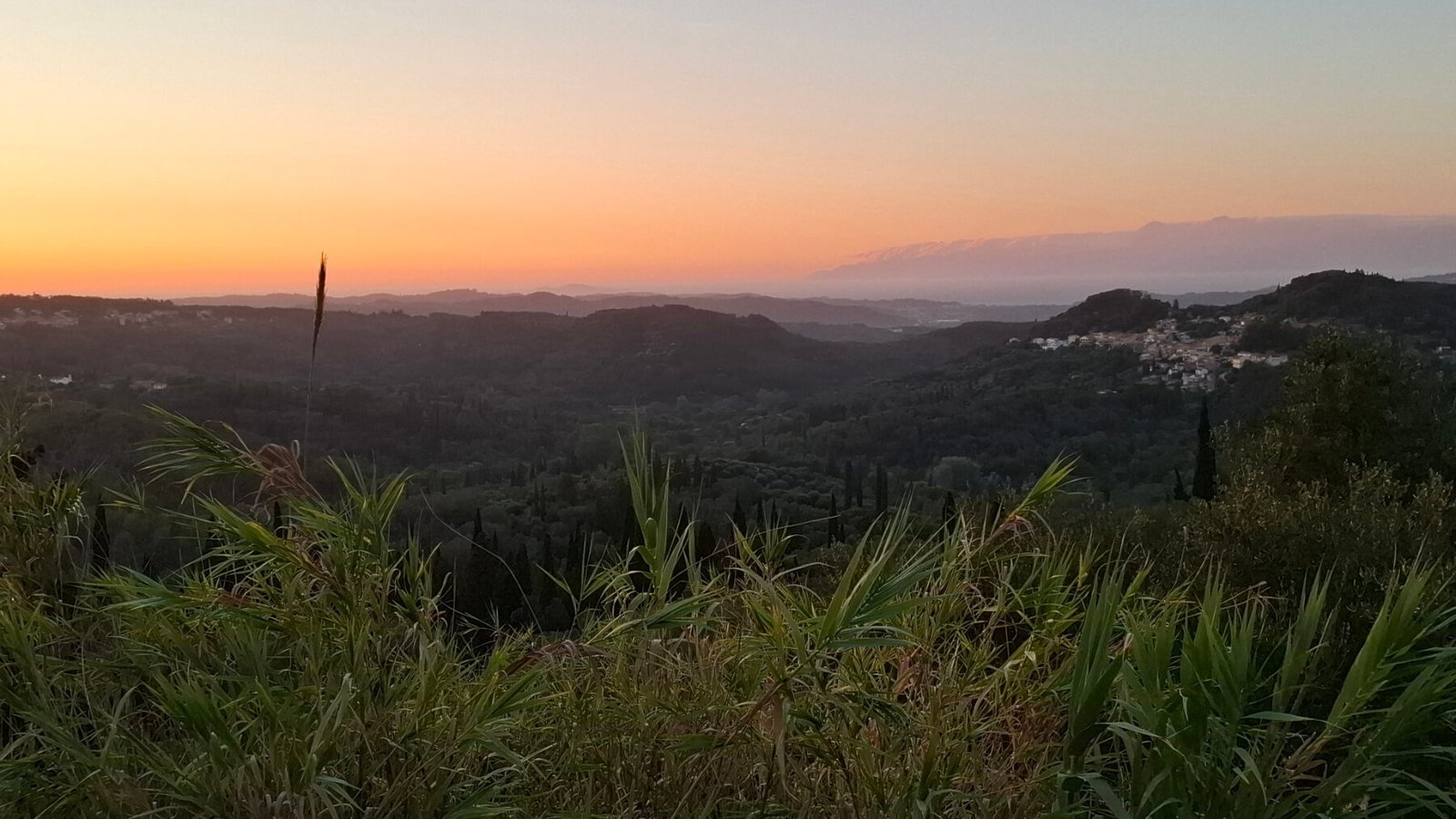
While the world watches the headlines, the Ionian Islands remain a place of profound and enduring peace.
Geographically, Corfu and the Eptanisa are located on the far western edge of Greece, providing a vast buffer from the East.
This distance has turned the Ionian into what experts call a “Blue Zone” of safety and stability in the Mediterranean.
Greece remains at the lowest advisory level (Level 1), reflecting its position as a secure member of the EU and NATO.
On the ground in Corfu, the daily rhythm of life continues with the same warmth and hospitality we have always known.
The only noise in our harbors is the lapping of the waves and the sound of local fishermen returning with their catch.
For those seeking an alternative to cancelled trips elsewhere, the Ionian offers a safe haven that is both familiar and exotic.
Choosing a stable destination like this supports the local communities that rely on your visit to keep their traditions alive.
The Pivot of the Cruise Industry
In response to the conflict, major cruise lines have shifted their itineraries away from the Eastern Mediterranean.
Ships that were originally scheduled for Haifa or Ashdod are now redeploying to the Ionian and Aegean.
This has created a “Safe Loop” of travel, concentrating tourism in the most stable waters of Europe.
Corfu and Paxos are seeing a steady stream of visitors who are looking for the luxury of peace and certain safety.
The infrastructure on the islands is operating at 100% capacity, ensuring a seamless experience for every guest.
Travelers can enjoy the historic reek and Venetian architecture and emerald waters without the shadow of the current crisis.
It is a time to appreciate the simplicity of nature and the enduring strength of the Greek summer.
Why Tourism Still Matters During a Crisis
It can feel conflicting to think about holidays while regional tensions are high and lives are being lost.
However, it is important to remember that tourism is a vital support system for many peaceful societies.
When you choose a destination like the Ionian, you are helping sustain local businesses and family-owned tavernas.
Travel allows us to maintain our connections to different cultures, even when the world feels divided.
Choosing to explore safely is a way to refuse the fear that often accompanies global conflict.
We encourage travelers to be mindful and respectful, acknowledging the gravity of the world situation while they rest.
Your presence helps keep the light on for communities that have spent generations welcoming the world.
Let your 2026 travels be a journey of renewal and reflection in a safe and welcoming environment.

Author: SpyrosZ
Born in Corfu 🇬🇷 with roots in a small green village 🌺 Sharing the island as I’ve lived and loved it.